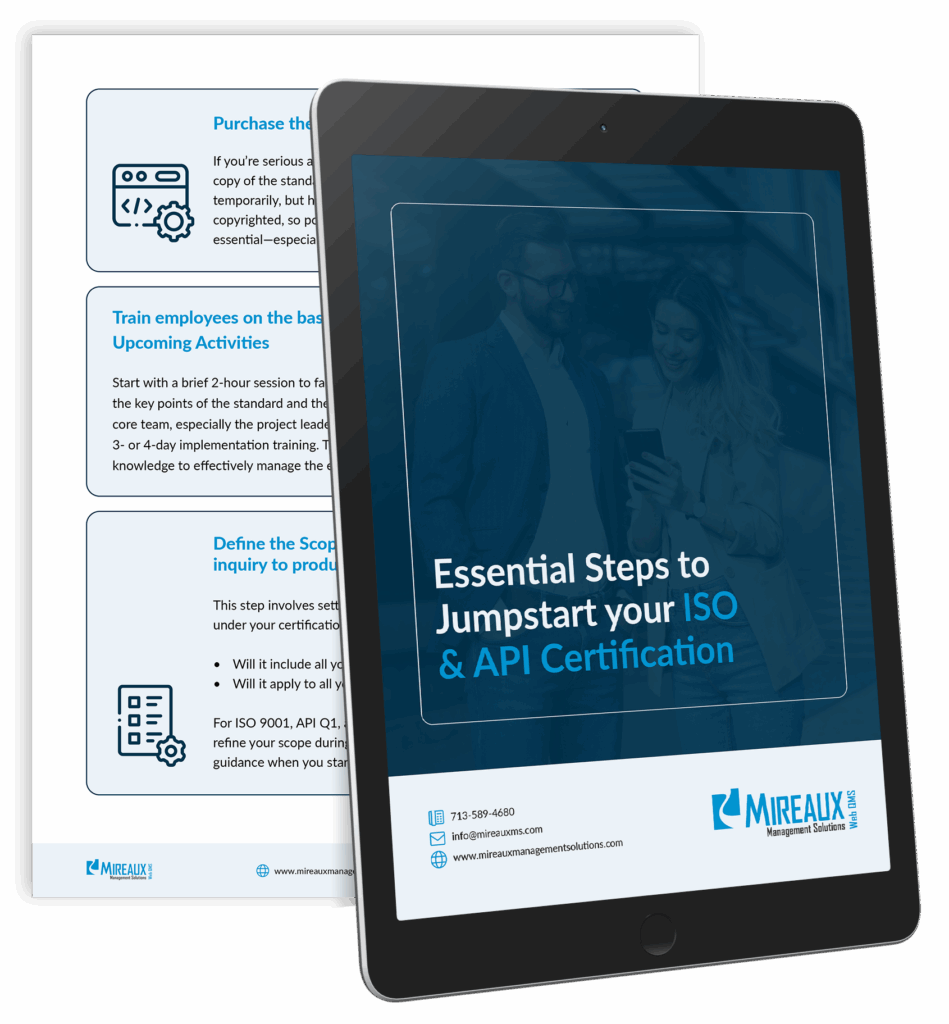
The Essential Steps to Jumpstart your ISO/API Certification Journey!
These are the same steps our own Consultants use to successfully guide our clients to achieve ISO/API certification.


Environmental and safety expectations are easy to underestimate until an incident, permit issue, audit finding, or worker concern exposes the gap. This course introduces how ISO 14001 and ISO 45001 work together to help organizations protect people, protect the environment, meet obligations, and build an integrated system that is practical, auditable, and useful every day.


Environmental and safety expectations are easy to underestimate until an incident, permit issue, audit finding, or worker concern exposes the gap. This course introduces how ISO 14001 and ISO 45001 work together to help organizations protect people, protect the environment, meet obligations, and build an integrated system that is practical, auditable, and useful every day.
ISO 14001 and ISO 45001 are more than certification checklists. They give organizations a practical structure for understanding how their work can affect the environment, workers, contractors, communities, customers, and business performance. This introductory course explains the intent of both standards and how they can be managed together through one integrated environmental and occupational health and safety management system. Participants review the main themes of context, leadership, planning, support, operations, performance evaluation, audits, corrective action, and continual improvement. The course is designed for leaders, process owners, EHS personnel, implementation teams, and employees who need a practical overview before beginning or supporting an ISO 14001 and ISO 45001 implementation or certification effort.
By the end of this course, participants will be able to explain the purpose of ISO 14001 and ISO 45001 and how they support an integrated EHS management system; describe how context, interested parties, and scope shape the system; recognize leadership, policy, responsibility, consultation, and participation expectations; identify how aspects, hazards, compliance obligations, risks, opportunities, and objectives drive planning; describe support, operational controls, emergency preparedness, monitoring, audits, management review, and corrective action; and recognize the type of evidence auditors expect during certification readiness activities.
No prior ISO 14001 or ISO 45001 experience is required. Participants should have a basic understanding of their organization’s operations, environmental or safety responsibilities, or management system goals.
Topics include why ISO 14001 and ISO 45001 matter for protecting people, the environment, and the business; the value of an integrated environmental and OH&S management system; context, interested parties, scope, and system processes; leadership, policy, responsibilities, consultation, and worker participation; planning for aspects, hazards, risks, opportunities, obligations, and objectives; support and operational control; emergency preparedness; performance evaluation; audits; management review; corrective action; improvement; and how Web QMS can help organize implementation evidence.
Instructor-Led: Participants’ successful completion of the course is determined by active participation, completion of class activities and discussions, and passing the course test, if assigned.
Instructor-led classes typically follow this schedule, unless otherwise stated on the specific class:
| Day | From | To |
|---|---|---|
| 1 | 08:30 CST | 10:30 CST |
There are no Upcoming Classes available at this time. Check back or send us a request.
There are no Self-Paced courses available at this time. Check back or send us a request.
Free Essential Guide
These are the same steps our own Consultants use to successfully guide our clients to achieve ISO/API certification.
DRAFT STANDARD ANALYSIS
We are actively reviewing the ISO 9001:2026 Draft International Standard and documenting key observations, wording and interpretation changes.
Sign up to receive one section of our analysis per week: