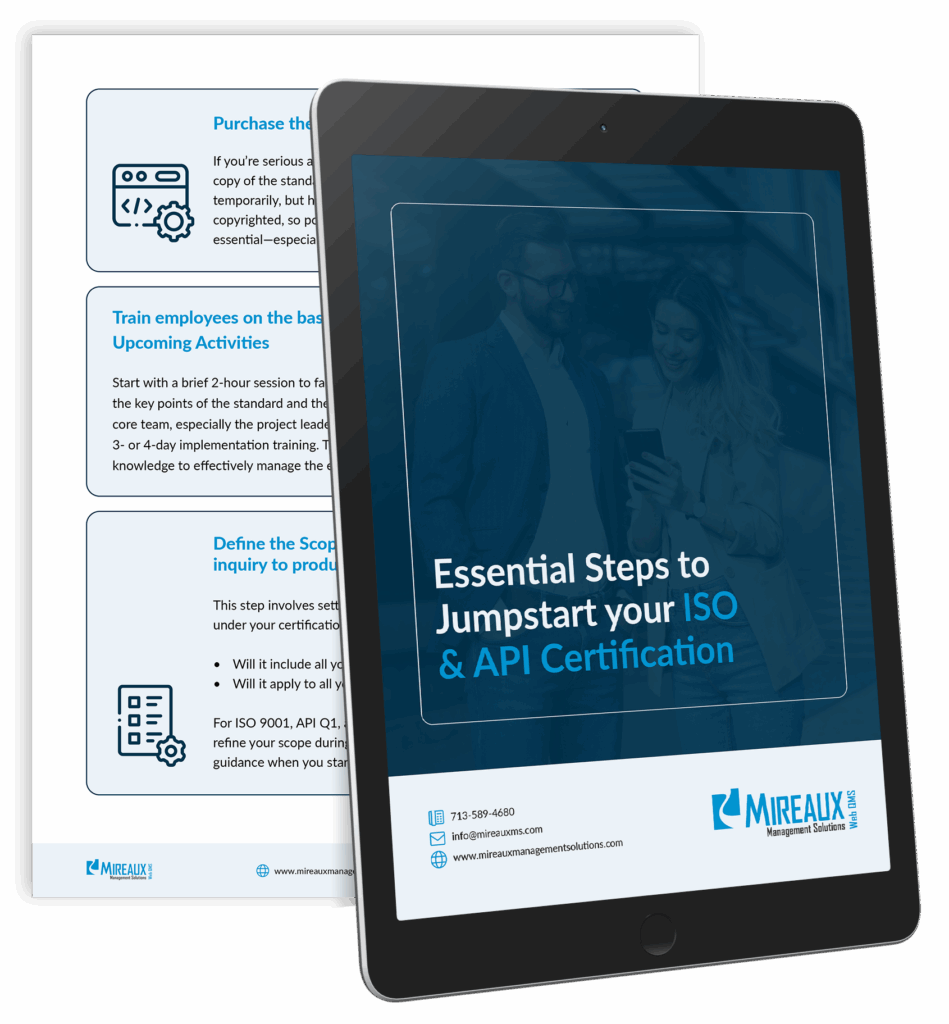
5 Key Steps to ISO and API Certification
Make the job easier by learning these key steps
Why Certification Can Be Tricky
ISO and API certification projects often face delays and confusion because teams lack understanding of compliance language, processes are unclear, and internal audits are mishandled. Knowing what to do upfront can save time, reduce stress, and make the process smoother.
Step 1: Train Your People—Before You Build Anything
Teams often don’t understand ISO/API terminology, causing meetings to become confusing and the project manager or consultant to be the only person who “gets it.”
Even with an engineering background, I needed formal training to fully understand ISO requirements.
Recommendations for Training:
- All employees: 2-hour introduction to basics and key terms.
- Project team: 3–4 day in-depth training to lead the system.
- Outcome: Faster, cheaper, and less painful implementation.
Step 2: Book Your Registrar Early—Because Auditors Fill Up Fast
Auditor availability is often the biggest risk to meeting certification deadlines.
A while back, one of our clients waited too long to book a registrar, resulting in no auditors being available until months later.
Recommendations:
Reserve your registrar immediately after your project plan is approved to secure the desired audit timeline.
Step 3: Map Your Processes—Then Set Your Scope
Assuming that ISO/API requirements must cover every process can make certification feel impossible.
A company once spent a year creating documents across multiple locations without a clear process map, wasting effort and confusing workflows.
Recommendations:
- Create a process map of core and support processes.
- Define your management system scope: in-scope processes are on the map; others are out.
- Identify exclusions and keep the team focused on what matters.
Step 4: Build a Project Plan—Do the Right Work in the Right Order
ISO/API has many requirements, and first-time teams often work on tasks in the wrong sequence, delaying critical milestones.
Clients sometimes request a Quality Manual before implementing procedures and records, causing you to work on the wrong things first thus causing delay and inefficiency.
Recommendations:
- Create a project plan listing tasks, owners, start/end dates, and dependencies.
- Ensures deadlines are met and critical tasks are prioritized.
Step 5: Don’t DIY Your First Internal Audit—Get an Experienced Auditor
Internal audits often fail when performed by the system builder or inexperienced staff, leading to incomplete or superficial reports.
I once saw internal audit reports that were empty checklists. This type of wasted effort can cause last-minute corrective action fire drills but most importantly, failures during your Stage 2 audit.
Recommendations:
- Hire a competent, independent auditor for the first internal audit.
- Ensure independence, detect blind spots, and avoid office politics.
- Outcome: Gaps are fixed before the registrar arrives, preventing last-minute rushes.
Key Takeaways
- Train your team first to speak the compliance language.
- Book your registrar early to secure audit dates.
- Map your processes and define your scope carefully.
- Create a project plan to prioritize the right tasks.
- Use an independent auditor for your first internal audit.